

What Happened
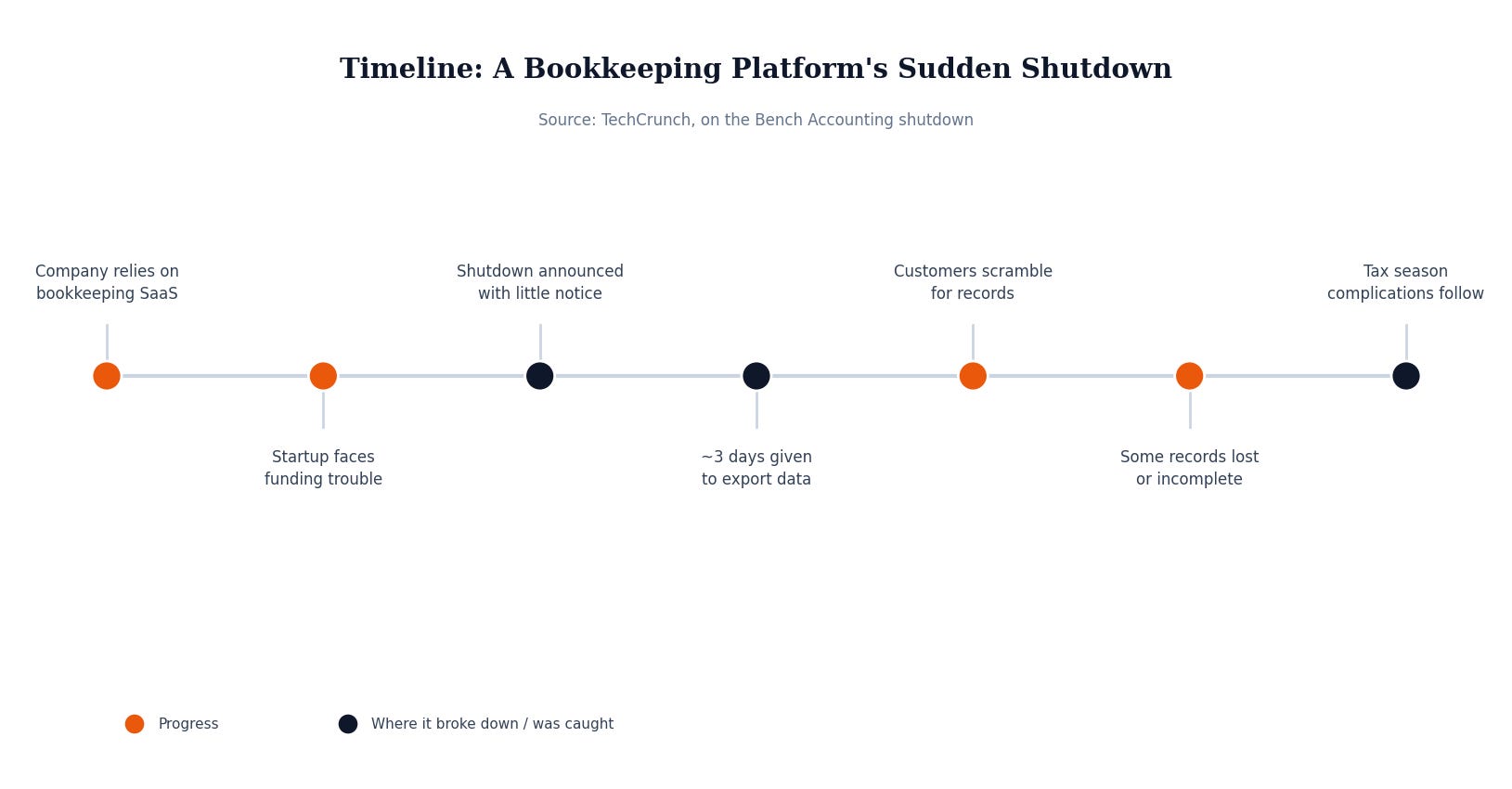
On December 27, 2024, customers of Bench Accounting logged in, or tried to, and found a single message where their bookkeeping platform used to be: “We regret to inform you that as of December 27, 2024, the Bench platform will no longer be accessible.” No slow wind-down, no months-long transition plan. The Canada-based startup, which had raised $113 million from investors including Shopify and Bain Capital Ventures and employed more than 600 people, simply went dark, according to TechCrunch’s reporting the same day.
More than 35,000 U.S. small businesses used Bench to handle their bookkeeping and, for many, their tax preparation. All of that lived inside Bench’s platform: transaction categorization, financial statements, and the underlying documents accountants and the IRS would eventually want to see. When the platform disappeared, so did straightforward access to all of it, right in the middle of a stretch when small businesses are closing out their books for the year and starting to think about tax season.
Bench’s own guidance to customers captured how tight the timeline was: download your data by December 30, just three days out, with a hard cutoff for full access by March 2025, and in the meantime, go file a six-month extension with the IRS because your bookkeeping situation is now unresolved. The company also pointed customers toward Kick, a competing startup, as a place to land. Founder Ian Crosby later said on LinkedIn that he’d been replaced by the board months earlier and that the shutdown followed a change in direction he didn’t control, which doesn’t change what customers faced: a vendor that held their financial records was gone, and the clock to get that data out was measured in days.
For a business owner, none of this involved a hack, a phishing email, or a criminal actor. It was simply a company deciding, or being forced, to stop operating, and taking customer access down with it on a timeline no customer set.
Why This Matters If You’re Not a Big Company
It’s easy to read this and think “that’s an accounting-specific story,” but the actual lesson has nothing to do with bookkeeping. Small and mid-size businesses routinely hand critical, hard-to-recreate data, financial records, customer histories, project files, communications, to a single SaaS vendor and treat the vendor’s platform as the only copy. That works fine every single day the vendor is in business. It stops working the day they’re not, and smaller vendors serving smaller customers don’t come with the assumption of permanence that a Microsoft or Google carries.
The businesses hit hardest by the Bench shutdown weren’t reckless. They picked a well-funded, VC-backed platform that looked stable right up until it wasn’t. That’s exactly the point: vendor stability is not something you can judge from the outside, and a funding round or a big customer logo tells you almost nothing about what happens if the company runs out of runway or a board makes a call the founder doesn’t agree with. The only thing that protects you from that uncertainty is not depending on any single vendor as your only copy of the data.
What Actually Would Have Stopped This
The fix here isn’t complicated, but it does need to be deliberate: export your data out of every SaaS platform you rely on, on a regular schedule, and keep that export somewhere you control, not inside the same vendor’s ecosystem. For bookkeeping specifically, that means periodic exports of financial statements, transaction detail, and source documents to a format you can open without that vendor’s login. The same logic applies to CRM data, project management platforms, and anything else where “the app” is currently the only place the information lives.
It’s also worth reading the contract or terms of service for exactly this scenario before you need it: what happens to your data if the vendor shuts down, how much notice are they obligated to give, and can you get a full export on demand rather than only during a wind-down window. Most businesses never check. The businesses that weren’t scrambling in December 2024 were the ones already exporting Bench data regularly as a matter of habit, not the ones who happened to get lucky.
Security Checklist for Your Business
Export critical data on a recurring schedule. Don’t wait for a shutdown notice; pull financial, customer, and project data out of every core SaaS platform regularly and store it somewhere you control.
Read the data-portability terms before you sign up. Know what a vendor owes you for notice and export access if they ever shut down or discontinue a product.
Keep an offline or vendor-independent copy of anything irreplaceable. A single platform should never be the only place records like tax documents or financial statements exist.
Ask your MSP to inventory your SaaS dependencies. Knowing exactly which vendors hold which critical data makes a sudden shutdown a manageable task instead of a scramble.
A business doesn’t need to get hacked to lose access to its own records; sometimes a vendor just closes the doors. MSP Today’s trusted tech partner is JK Computer Solutions. If you want a second set of eyes on your setup, get in touch.
Source: TechCrunch, “Bench shuts down, leaving thousands of businesses without access to accounting and tax docs”.