


One Report, One Audit, One Settlement
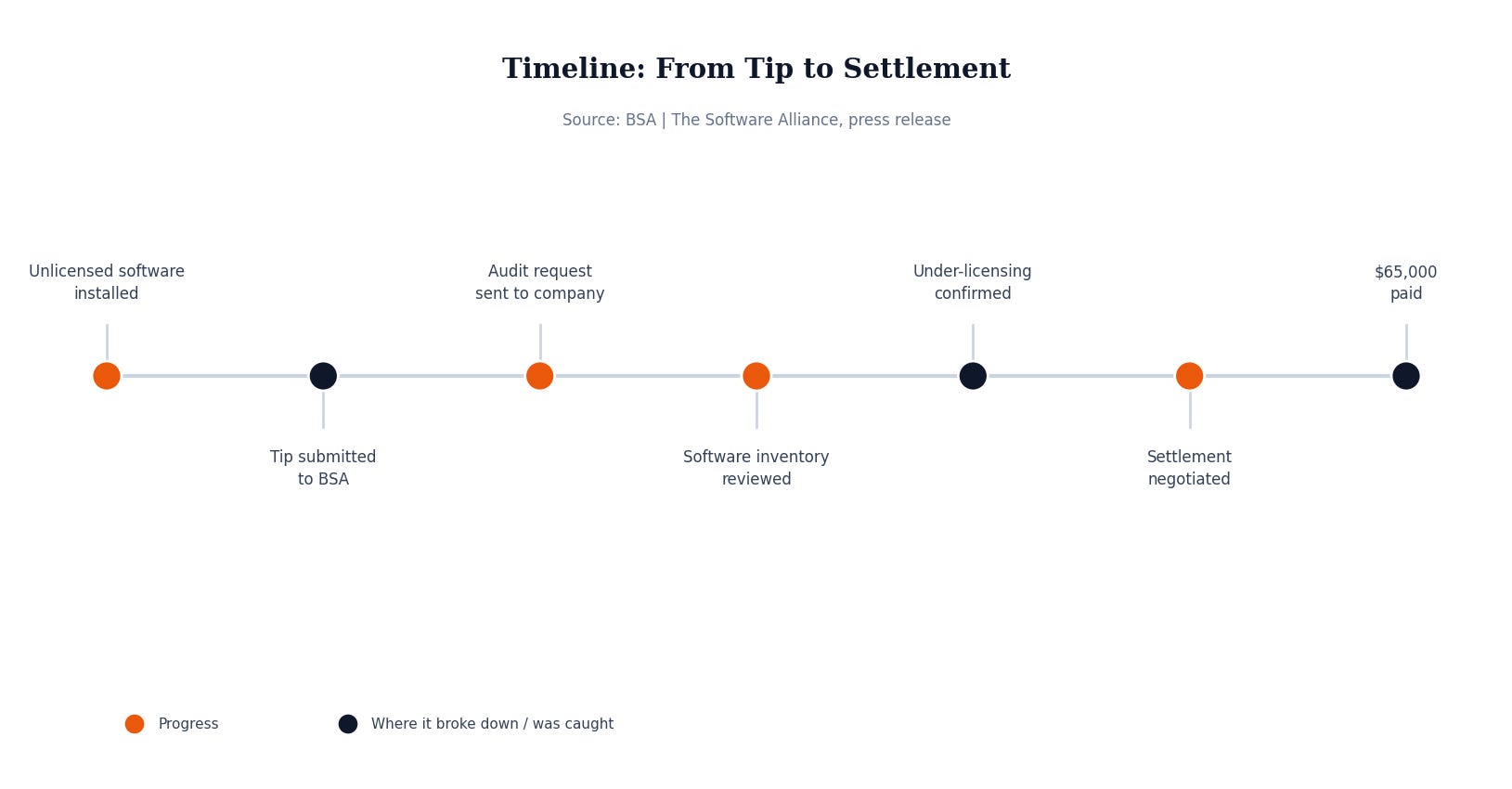
Gibson Overseas, Inc., a Commerce, California-based provider of housewares products, found itself on the wrong end of a software compliance investigation after someone submitted a confidential report through BSA | The Software Alliance’s piracy-reporting website. BSA is the trade group that represents major software publishers, including Microsoft and Adobe, and one of the things it does on their behalf is investigate reports of unlicensed software use inside businesses.
The report didn’t need to come from a hacker, a disgruntled ex-employee’s lawsuit, or a government regulator. It just needed to come from someone who noticed the company was running more copies of software than it had paid for, and who knew where to send that information. From there, BSA opened an investigation into Gibson Overseas’s use of Adobe and Microsoft software.
The case ended the way most of these do: not in court, but in a negotiated settlement. Gibson Overseas agreed to pay $65,000, delete every unlicensed copy of the software in question, purchase legitimate licenses to replace what it had been using, and put stronger software asset management practices in place going forward. A company representative said in a statement that the audit had let the organization implement processes to make sure licensing issues didn’t resurface. A BSA vice president added that organizations need to maintain sound procedures to ensure the software running their business is properly licensed.
Nothing about this case involved a data breach, stolen credentials, or a ransomware note. It started with software that had simply been installed more times, or on more machines, than the license agreement allowed, and it ended with a bill, a licensing cleanup, and a public press release with the company’s name attached.
Why This Matters If You’re Not a Big Company
It’s tempting to read a case like this and assume software licensing enforcement is something that happens to bigger companies with bigger IT footprints. It isn’t. BSA’s reporting program exists specifically to catch this kind of thing at businesses of any size, and the trigger is almost always mundane: a spreadsheet of purchased licenses that fell out of sync with what actually got installed, a laptop imaged from an old master copy, an employee who installed a personal copy of Office or Photoshop on a work machine because it was faster than filing a request.
Small and mid-size businesses are, if anything, more exposed to this kind of drift. There’s rarely a dedicated person tracking every license against every install, software gets added and removed as staff turn over, and nobody notices the gap until someone outside the company reports it. The report itself can come from almost anyone with visibility into what’s installed, current employees, former employees, or even competitors. Once BSA has a report, the investigation and the negotiation happen regardless of company size.
What Actually Would Have Stopped This
The fix here isn’t exotic. It’s a basic software asset management practice: keep an accurate, current record of every software license the business owns and match it against every installation on every device. When someone leaves, when a machine is retired, or when a new license is purchased, that record should get updated the same day, not caught up on once a year. A lot of businesses have some version of this list, but it drifts out of date within months because nobody owns keeping it current.
The other piece is making license compliance part of routine IT hygiene rather than something only checked when a demand letter shows up. Doing an internal license audit once or twice a year, comparing installed software against paid licenses, catches problems before an outside report does, and it costs a fraction of what a settlement and legal fees would.
Security Checklist for Your Business
Keep a live software license inventory. Track every paid license against every actual installation, updated the day something changes, not once a year.
Run your own internal audit periodically. Compare installed software to purchased licenses at least annually, before anyone outside the company does it for you.
Standardize how software gets installed. Route new software requests through IT rather than letting employees install what’s convenient on their own.
Retire licenses when machines or staff leave. Deactivate and reclaim licenses immediately during offboarding or hardware retirement, not months later.
A software licensing gap doesn’t need a hacker to find it, it just needs one report to a website. MSP Today’s trusted tech partner is JK Computer Solutions. If you want a second set of eyes on your setup, get in touch.
Source: Global Housewares Provider Pays $65,000 to Settle Claims of Unlicensed Software Use.