

You are late for a meeting. You pull into a spot, see the QR code on the meter, scan it, and pay in 20 seconds. Convenient. Also, increasingly, a trap.
On September 3, the Federal Trade Commission warned that scammers are placing fake QR code stickers on parking meters, either covering the real code or adding a new one. When you scan it, you land on a payment page that looks legitimate and exists only to collect your card number and personal details.
It is already happening
One driver in New Westminster, British Columbia reportedly lost $2,000 after entering card details on a fake payment site. In Asheville, North Carolina, around 20 fraudulent stickers were discovered on parking meters in February 2026. Asheville does not use QR codes for parking payments at all, which made any code on a meter an instant red flag.
That detail is the key lesson: know how your city actually takes payment. If you do not know, that is a reason to check before you scan.
The 5-second check
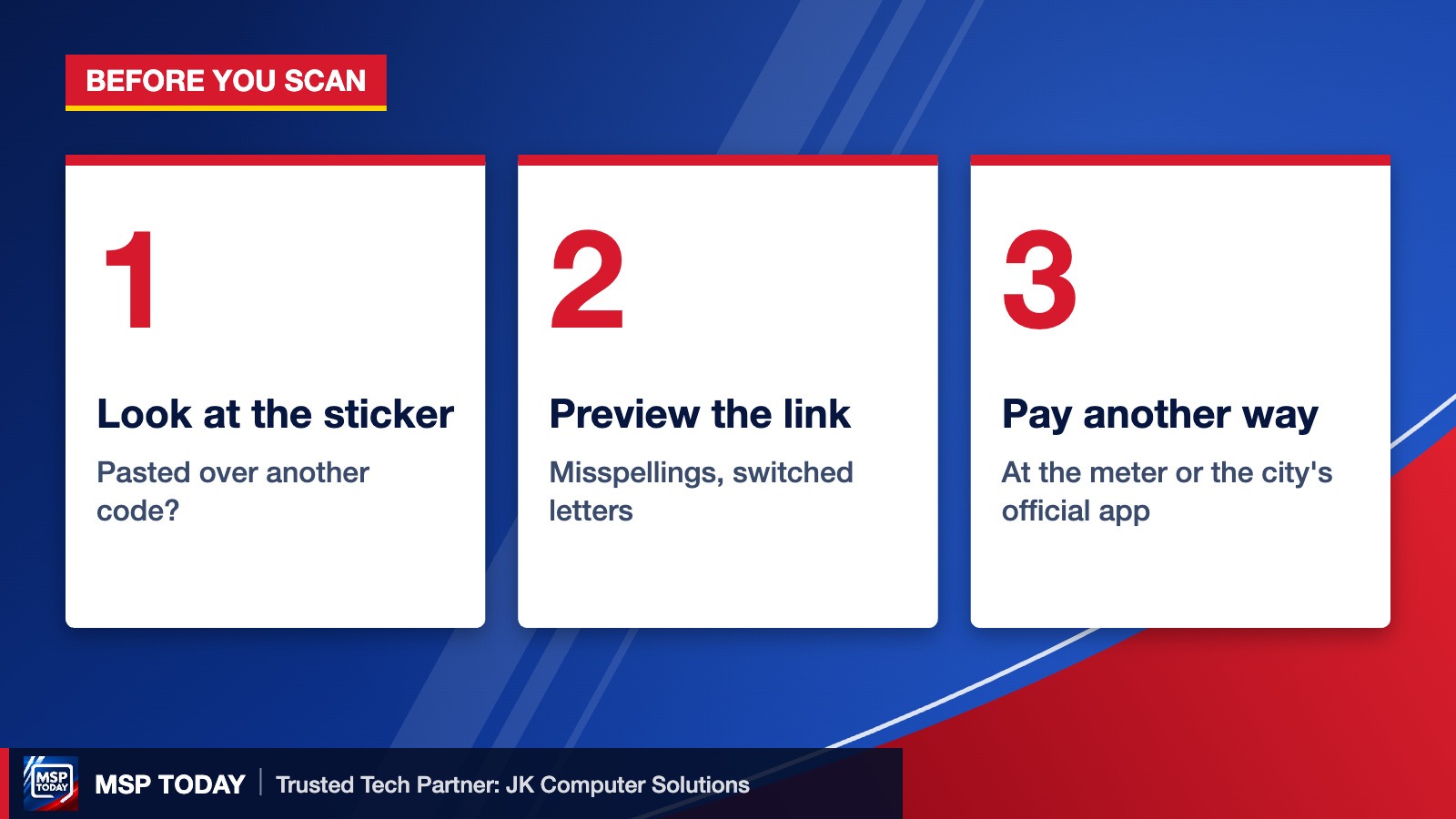
Look at the sticker. Does it look pasted on top of another code, crooked, or out of place?
Preview the link before you tap. Your phone shows the web address first. The FTC says to watch for misspellings, switched letters, or an address that does not match the parking service.
Pay another way. Use the meter itself or the city’s official app, downloaded directly from your app store.
If you already scanned and entered details
Change the passwords for any account you used on that page.
Call your card issuer and watch for charges you do not recognize.
Report it at ReportFraud.ftc.gov.
The same trick works everywhere
Parking meters are just the latest place for this tactic. Any QR code printed on a sticker, flyer, table tent, or package can be swapped for a bad one. If a code asks for a payment, a login, or personal information, treat it the way you would treat a link in an unexpected text.
If you run a business that prints QR codes on menus, signs, or invoices, check them regularly. A sticker over your code is your customer’s problem and your reputation’s problem.
Your weekend rule
Before you scan anything this weekend, ask: Did I expect this code to be here, and where does the link really go? Ten seconds of doubt is cheaper than a new credit card number.
Share this with someone who parks downtown.
And if you would like your phone set up to flag risky links and protect your accounts, reply to this email with the word SCAN or book a conversation at jkcsi.com/contact.
JK Computer Solutions, MSP Today’s Trusted Tech Partner, helps families and businesses stay protected from everyday scams.
Sources: Federal Trade Commission consumer alert on parking meter QR codes (Sept. 3, 2026), as reported by Reader’s Digest; see more at consumer.ftc.gov.