

Getting scammed once is bad. What happens next is often worse.
AARP lists recovery scams among the five biggest threats to watch in 2026, and the idea is cruel in its simplicity: criminals target people who have already lost money, and offer to get it back.
IG1]]
How the “second scam” works
After an initial fraud, the victim gets a call, email, or message from someone posing as law enforcement, an attorney, or a government agency. They say they have located the stolen funds and can recover them, but there is a fee. The fee must be paid with gift cards, cryptocurrency, or a wire transfer, which are the payment methods that are nearly impossible to reverse.
Some versions send a counterfeit check for more than the original loss and ask the victim to return the difference. The check turns out to be fake, but the money the victim sent back is real, and it is gone.
It works because the target is stressed, embarrassed, and hopeful all at once. Scammers know it, and that is exactly why they go looking for people who have just been hit.
Four red flags
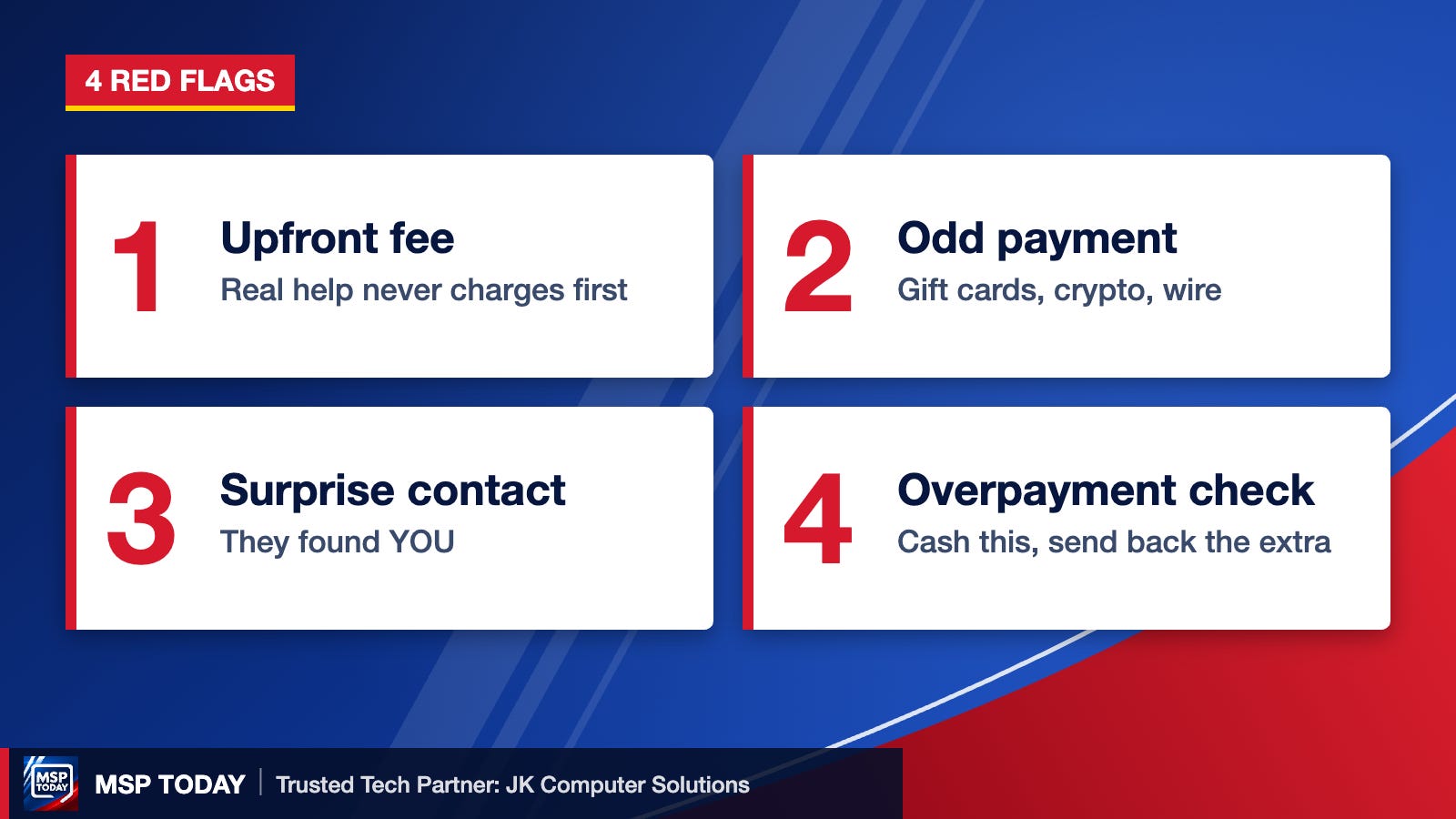
They want money first. Real law enforcement and legitimate agencies do not charge a fee to help you.
They ask for gift cards, crypto, or wire transfers. No legitimate organization collects payment this way.
They contacted you. Be extra suspicious of anyone who reaches out to “help” with a problem you never reported to them.
A check arrives for more than you lost. That is the setup, not a refund.
What to do in the first 24 hours after a scam
Call your bank or card issuer immediately using the number on the back of your card.
Change the passwords on any account that might be affected, starting with email, and turn on MFA.
Consider a credit freeze if personal details were shared.
Report it at ReportFraud.ftc.gov. Reports help investigators and create a record.
Research any “recovery” firm by searching its name with words like “scam” or “complaint” before you respond.
AARP’s Fraud Watch Network Helpline is free at 877-908-3360 if you want to talk it through with a person.
There is no shame in being targeted
Professional criminals run these operations full time. Being fooled once says nothing about your intelligence. Telling someone quickly is the best defense, because the second scammer is counting on your silence.

If a device or account may be compromised, act today.
A scam often leaves something behind: a remote-access tool, a stolen password, or an email account someone else can still read. If you think that might be you, contact us at jkcsi.com/contact and we will help you secure your devices and accounts.
JK Computer Solutions, MSP Today’s Trusted Tech Partner, cannot get stolen money back, and anyone who promises that is the red flag. We can make sure the door they came through is closed.
Source: AARP, “Five of the Biggest Scams to Watch for in 2026.”